

In the heart of South America, there exists a land of captivating beauty and rich cultural heritage known as Peru. Nestled between the Pacific Ocean and the towering peaks of the Andes Mountains, Peru is a tapestry of diverse landscapes, from the arid deserts along the coast to the lush rainforests of the Amazon. And don’t forget the exciting food scene, which is a blend of South American ingredients and Japanese techniques.
Peruvian history has a fascinating narrative. The first thing that comes to mind is the Inca civilization. At its highest point, the Inca empire stretched from the south of Colombia to the north of Chile and the north of Argentina – the largest empire in the world at that time! Not surprisingly, the word “Inca” actually means “ruler” in the native language Quechua. At that time, the entire population was 10 million people.

Things you didn’t know about Peru:
- A chasqui (or chaski) was basically the Inca Empire’s super-fit, speedy messenger. These guys were quick on their feet and well-trained. Their gig? Hauling messages – whether it was encoded in quipus, spoken word, or tucked in a small package. Picture this: along the Inca road system, they had these pit stops called chaskiwasi (like chasqui hangouts), spaced around 2.5 kilometers apart. That’s where one exhausted chasqui tagged out with a fresh one, swapping their messages. This relay race of messengers meant they could shoot a message or a gift across a whopping 300 kilometers in just one day.
- Puno, on the shores of Lake Titicaca, has a unique way of celebrating the Day of the Dead. Locals create small boats out of reeds and fill them with offerings for the deceased, then set them afloat on the lake.
- The Chauchilla Cemetery in the Nazca Desert contains well-preserved mummies and pottery from the Nazca culture. The mummies are displayed on the surface due to the extremely dry climate.
- In the Amazon River, you can find pink river dolphins known as “boto.” They are unique to the region and play a significant role in local folklore.
- The Peruvian dictator Alberto Fujimori was of Japanese decent and had the nickname “El Chino”.
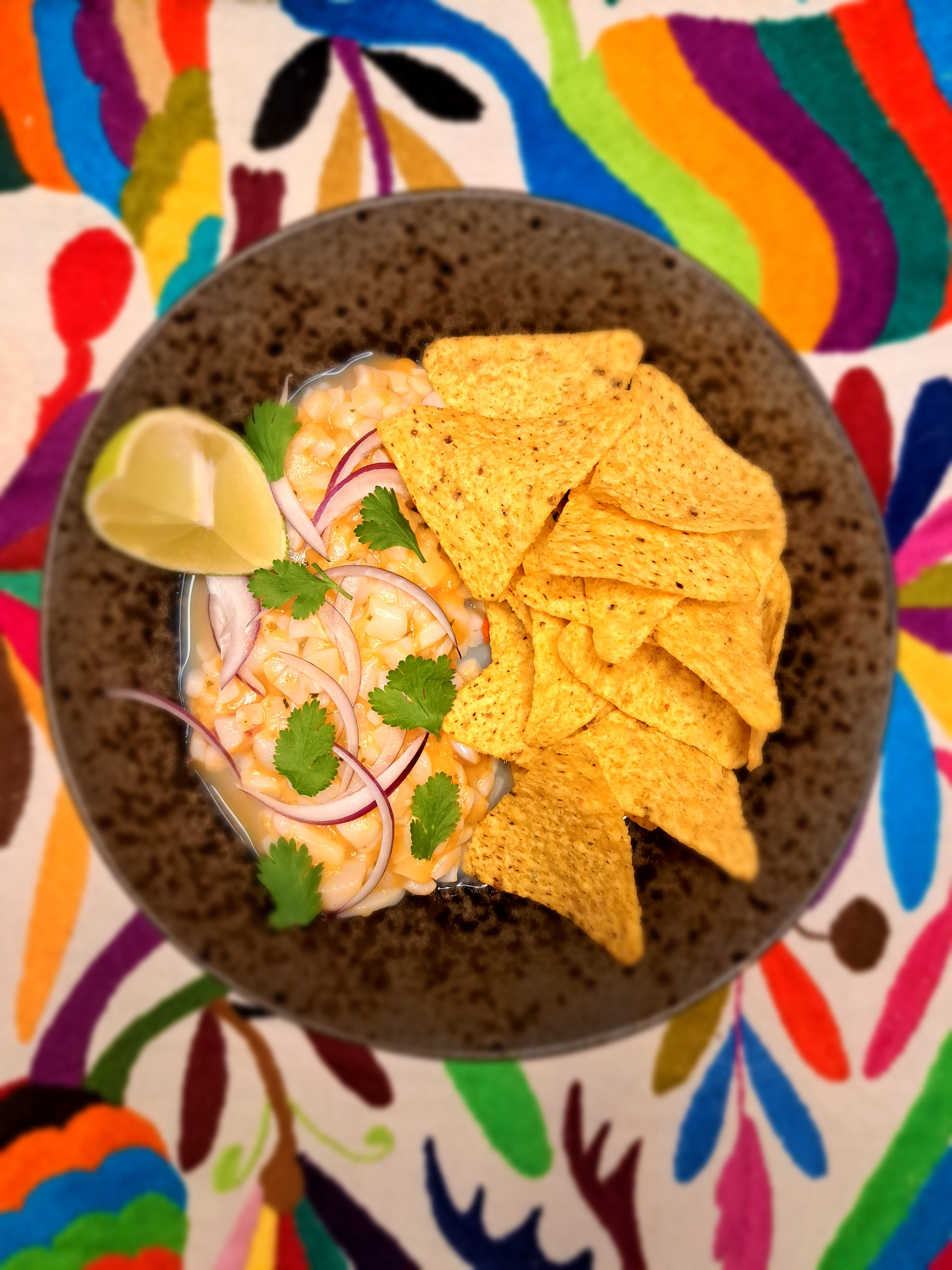
This scallop ceviche is a delicious Peruvian classic. The sweet potato is what makes it truly Peruvian. It is a modern adaptation of a traditional recipe, the leche de tigre is quite a lot but don’t wory you can freeze it for a rainy day. Also you need quite a bit to marinate the scallops. The lime juice does some magic on the fish. It messes withA the proteins, making the texture and look of the fish seem like it’s been cooked, even though there’s no heat involved.
Ingredients:
- 1 sweet potato
- 5 cloves of garlic
- sunflower oil
- 300 ml of fish stock
- 1/2 red pepper
- 8 sprigs of cilantro
- 1/4 red onion
- 300 ml fresh lime juice (about the juice of 8 limes)
- salt and pepper
- 250 grams of raw scallops
Recipe:
- Preheat your oven to 200C
- Wrap the sweet potato in aluminium foil and bake for about an hour or until the sweet potato is soft all the way through.
- Peel your garlic cloves and fry them until golden in the sunflower oil to take the sharp edge of. (Don’t throw away the oil! You can use it to make fried up some rice to make some epic garlic rice)
- In a small saucepan add the garlic, fishstock, half red pepper, cilantro. bring to boil and cook for 10 minutes. Add the onion and take of the fire.
- Blend with the limejuice.
- Scoop out the sweet potato and little by little add it to the lime fishstock mixture. Blend until smooth. Taste! and Let it cool down.
- Dice the scallops and marinade in the sauce you just made.
- Marinade for 5 to 10 minutes. Add salt.
- Serve with raw onion slices and tortillachips or crackers.
 Little Lost Cook
Leave a comment